The Real Math Behind the Big Payouts - Examples, Probabilities, and Smart Bankroll Management
Parlays sit at the intersection of excitement and arithmetic. They're the tickets people screenshot, post, and brag about—tiny stakes blooming into outsized payouts. And yet, the math behind them is wildly misunderstood. If you're going to stack legs, you need to know what multiplies, what doesn't, and why the house smiles when you do.
A parlay is one wager that ties together multiple selections—called legs. Every leg has to win or the entire ticket collapses. One miss, and it's done. A push usually drops that leg out and recalculates the payout as if it never existed; rules can vary by book, so read them like you would any contract that touches your wallet.
The industry loves parlays because they're sticky. As legal markets expanded, state reports show handle cresting past $70 billion annually, and a hefty slice flows into multi-leg products. Operators report higher hold on parlays than on singles. You don't need a finance degree to infer the rest.
Mechanically, parlays are straightforward: convert each leg's price to decimal odds, multiply the decimals, then multiply by your stake. American odds convert cleanly—positive American odds A become (1 + A/100); negative odds B become (1 + 100/|B|). The product of those decimals gives your combined price. Easy on paper, trickier in practice since each leg's true probability isn't what the price suggests after vigorish.
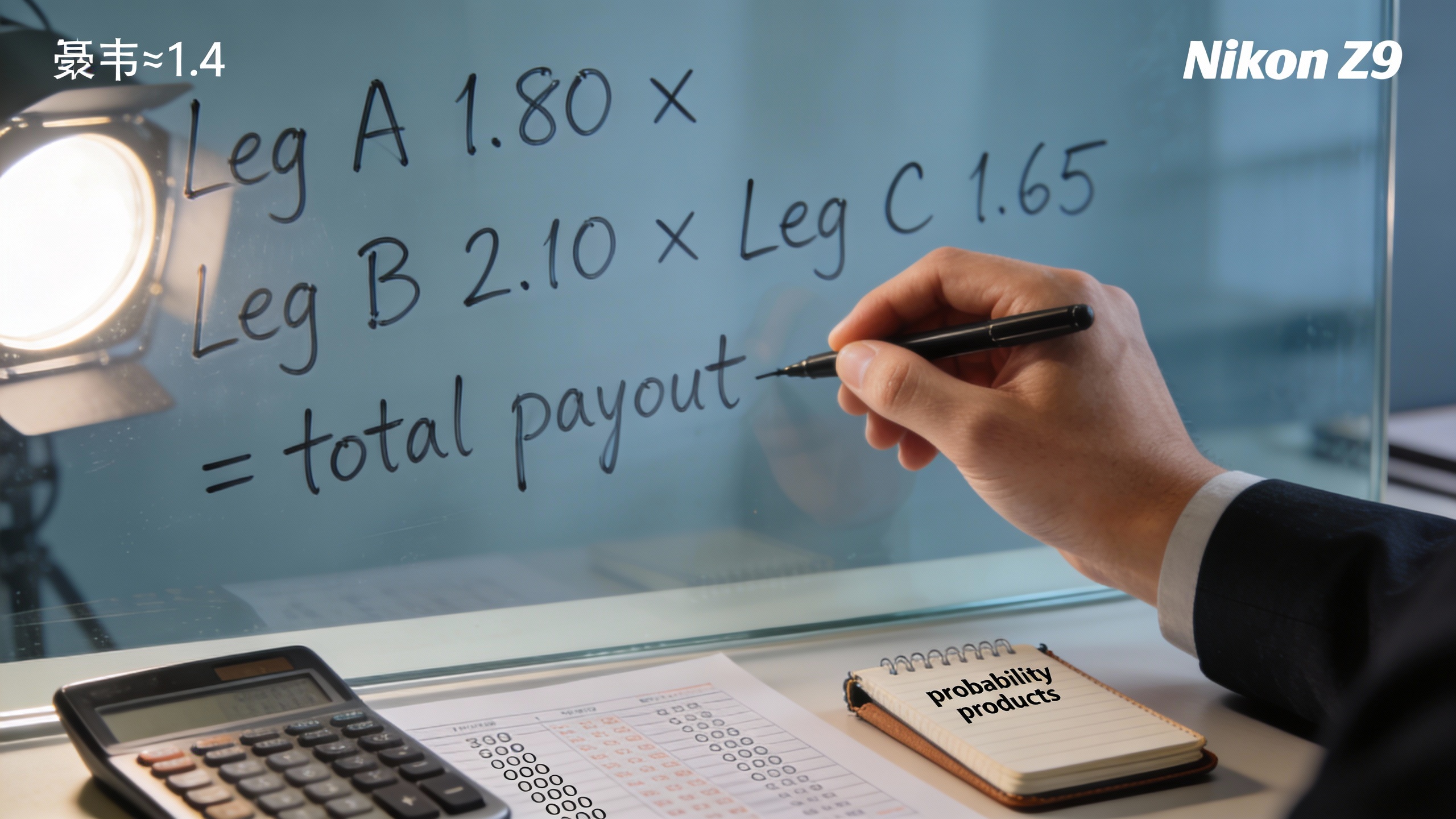
Pushes and voids matter. If one leg pushes in a three-leg ticket, you're effectively holding a two-leg parlay at settlement. Same-game parlays (SGPs) stitch multiple outcomes from the same event; books limit or price correlated legs differently because your player prop and team total aren't independent. And books don't all price parlays the same—some use pure multiplication, others use payout tables or modifiers.
The chance of winning the parlay is the product of the legs' individual probabilities—so every new leg is another gate you have to clear. Translation for everyday bettors: yes, the payout grows fast, but your hit rate falls faster. Two legs priced like favorites can still flatten a bankroll when the math stacks against you over time.
That's why seasoned traders look at joint probability before they daydream about the payoff number on the slip. Pricing practices aren't uniform. Some operators offer true-odds multiplication; others bake in extra margin on multi-leg tickets. Same-game parlays often carry added friction because of correlation risk.
The math cuts clean. Take two legs, each with a 60% chance. The probability both hit is 0.60 × 0.60 = 0.36, or 36%. Stick three 60% legs together and you're down to 21.6%. Now imagine your edge is small or nonexistent. Margins compound, just like payouts do, only they compound against you.
Expected value is why the house leans into parlays. Public filings and academic work peg straight-bet hold around 4–7% in many markets; parlays commonly sit in the 8–15% range. That's not a conspiracy—just arithmetic plus human taste for a lottery ticket on a Sunday. You can be a good handicapper and still bleed on parlays if the edges don't exceed the combined margin. And they rarely do.
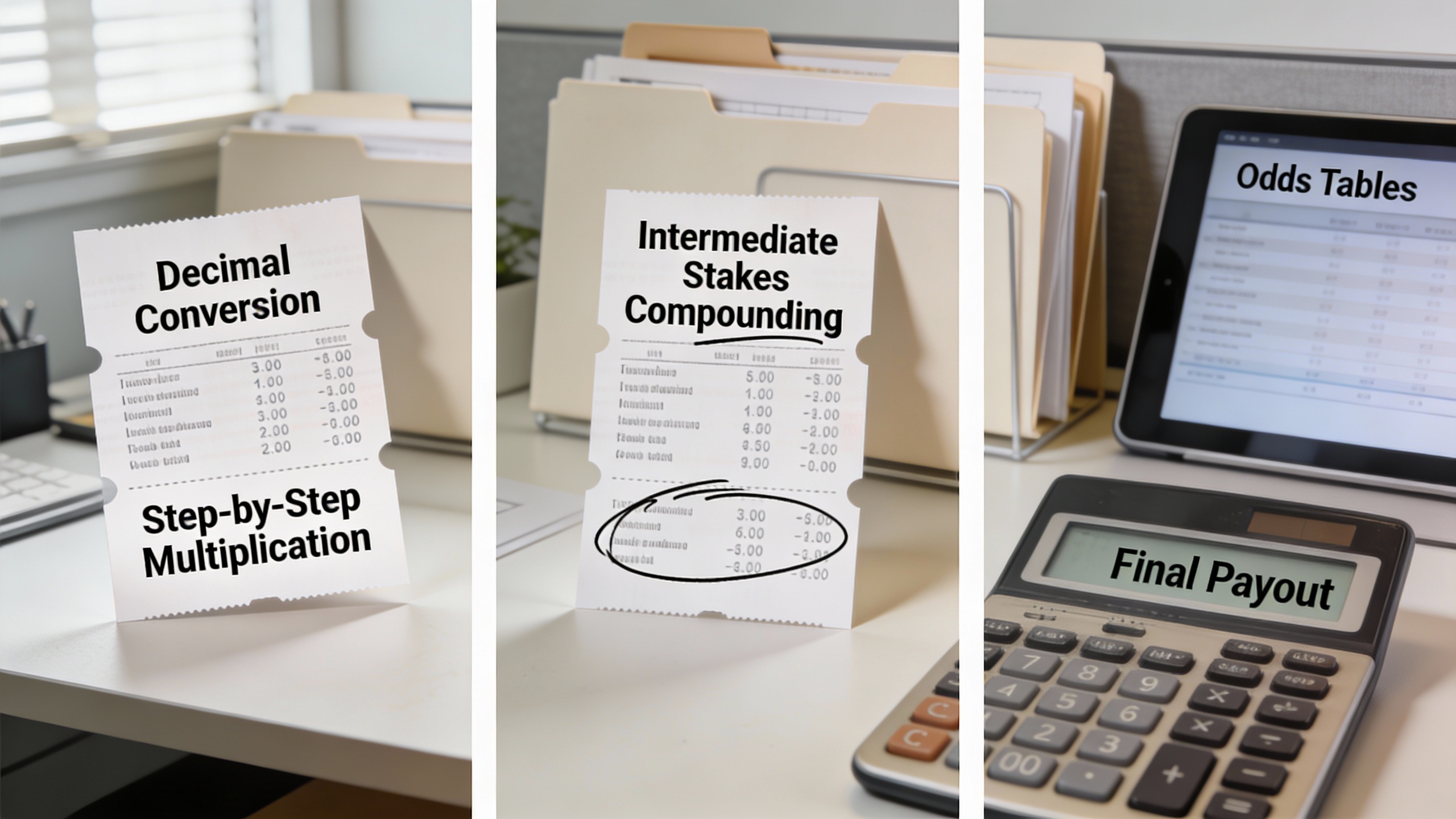
Leg 1: Favorite at -150 (decimal 1.67, ~60% chance)
Leg 2: Underdog at +120 (decimal 2.20, ~45.5% chance)
Combined: 1.67 × 2.20 = 3.674
$100 stake returns: $367.40 gross
Win probability: 27.3%
Leg 1: -130 favorite (decimal 1.77, ~56.5%)
Leg 2: -120 favorite (decimal 1.83, ~54.6%)
Leg 3: +105 underdog (decimal 2.05, ~48.8%)
Combined: 1.77 × 1.83 × 2.05 = 6.64
$50 stake returns: $332 gross
Win probability: 15.0%
If you're not checking the math, you're guessing. And guessing with multipliers is unforgiving. On line betting apps make stacking legs feel effortless. That's the point. Keep the stakes tiny relative to your roll—think half a percent to one percent per parlay if you're serious about longevity.
At I Bet Sports and peers, the parlay builder is slick by design; the discipline has to be yours. If you insist on weekly fun tickets, set a fixed budget and quarantine it from your core wagers.
Promotions help, but only when they close the gap on expected value. Parlay insurance that refunds a leg can tame variance without flipping the EV. Boosts can be worthwhile if you're already leaning that direction and the bump moves the combined price toward fair.
Edges exist, though they're scarce. Maybe you model player usage better than the market, or you're early to an injury report. If your single-leg edges are real and independent, a parlay can compound the advantage. Just remember that books trim limits, restrict correlations, and move lines quickly. The window is narrow.
Common myths to drop: that parlays "multiply ROI," that favorites make them easy, that all books pay the same, and that insurance equals value. It's entertainment with a price tag unless the math says otherwise.
Bottom line: protect your bankroll first, chase glory second. The math doesn't lie, and neither do the long-term results. If you're going to play parlays, play them smart—with full knowledge of what you're really betting against.