NFL, NBA, MLB, Soccer, and Tennis House Rules, Grading Systems, and Common Voids to Avoid
Chaos loves the small print. iBetSports.ag has turned that truth into a business model—if you believe the angry threads burning across X and the r/sportsbook megathreads. During the NFL Wild Card frenzy, bettors watched wins evaporate under the catch-all banner of "house discretion," and the reaction went nuclear.
Not because losing is new, but because winning and still getting voided feels like a magic trick nobody signed up for. Let's cut through the fog. The house rules, their grading quirks, and the most common void traps show a pattern—one that punishes ambiguity and rewards vigilance.
If you're wagering on NFL, NBA, MLB, soccer, or tennis props with offshore outfits, you need a map. This is that map. We'll decode how bets are graded, when a prop mysteriously turns into nothing, and where the language gets slippery.
We'll also talk about the bigger machine—how sportsbooks set odds, what they fear, how they nudge lines, and why a tiny clause about "irregular play" can cost you a month's rent. You're here for practical clarity. You'll get it—along with a few scars earned by others.
Search traffic for "iBetSports rules" jumped 450% in a week for a reason. When a $25,000 NFL moneyline win gets voided over "line movement irregularity," people stop scrolling and start screenshotting.
Complaint trackers put their void rate near 8.2% of settled bets, which dwarfs the 0.5% average at regulated U.S. books. That's not a rounding error; it's a business choice. NFL player props reportedly saw a 12% void rate last season. NBA was 9%. Soccer around 7%. Tennis 6%. MLB, by comparison, felt tame at 4%.
Grading is ostensibly tied to official league data feeds. In practice, a tangle of exceptions kicks in: minimum play-time thresholds, weather delays, load management, injuries after lineups lock, abandoned matches, and the dreaded "palpable error."
It's all worse when public attention spikes—playoffs, holidays, marquee matchups. The book's risk team turns paranoid, and what looked like a clean win becomes a customer service labyrinth. You email. They "review." Days pass. Confidence drains. Consumer advocates have a simple mantra: document everything.
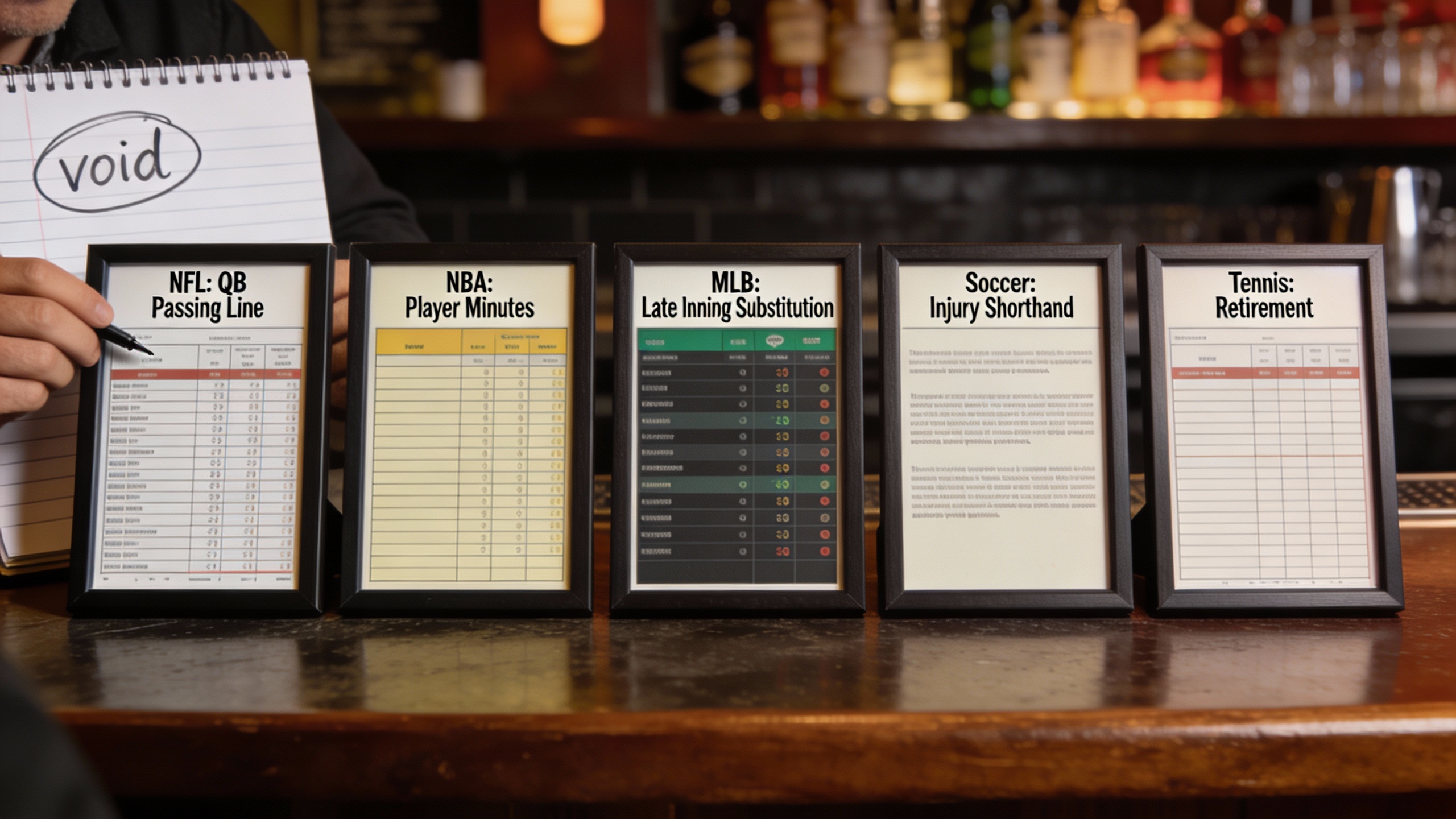
Each sport has its own landmines. Here's where the bodies are buried in NFL, NBA, MLB, soccer, and tennis betting at iBetSports.ag
Props are graded using official league stats, but a late injury or "limited participation" can nuke your ticket. Same-game parlays with uncertain starters are high-risk, low-recourse.
Load management turns bettors into unpaid interns. If a star logs fewer than five minutes, the shop can void related props across a parlay. Christmas Day chaos is legendary.
Starting pitcher changes turn many markets into confetti. Weather delays over 30 minutes often strike props tied to in-game pace. Wait for confirmed lineups.
Extra-time goals count for some markets, not others. Red cards announced before kickoff can void certain props. "Abandoned matches" cascade into arbitrary voids.
Retirements, walkovers, mid-match tweaks—if sets aren't completed, whole markets fall apart. Majors are steadier; smaller tournaments can be roulette.
Across all five sports, the common threads are timing and participation rules. If you can't confirm who's actually starting and how long they're expected to play, you're flirting with a void. It's not just an injury report betting impact—it's the entire scaffolding of whether your wager even qualifies as a wager once the whistle blows.
During the NFL Wild Card round, a bettor called SteelCitySharp posted a $25,000 Bengals moneyline win that got voided for "line movement irregularity." The thread caught fire—thousands echoed similar experiences—and after a messy dance with support, a bank chargeback did the heavy lifting. Not justice. More like a truce.
Regulated books tend to live with their mistakes. Offshores often don't. "Palpable error" is a safety hatch they'll pull when a stale price or fat-fingered total would cost them big. Add in AI-driven sharp detection flagging correlated parlays, and the shop starts hunting for ways to trim exposure via grading rules.
Grading, done right, is clean: official stats, posted terms, swift settlement. Done loosely, it becomes retroactive dispute theater. That's not risk management; that's erasing the past.
The NBA Christmas Day saga: a $150,000 parlay on Warriors props vaporized when a star saw the floor for four minutes, tripping the book's minimum-play rule. By letter of the law, it stood. By spirit, it felt like a gotcha designed for holiday headlines.

Every bettor chases value. Smart bettors chase value that gets paid. That's the whole game here.
If your biggest skill is picking winners that vanish into the ether, you don't have an edge—you have a hobby that steals sleep. Practical steps help. Start by tracking which markets at which books actually settle cleanly.
Props tied to clear participation thresholds (RB carries, QB attempts) can be safer than exotic combos that hinge on a coach's whim. Avoid same-game parlays with questionable starters. And when a line looks dreamy, ask why.
Keep receipts. Screenshots of the line at bet time. Timestamps. Email confirmations. If you're using a VPN, log the IP. Offshore shops love ambiguity; your job is to remove it. Social pressure turned a bunch of "final decisions" into partial refunds almost overnight.
One more angle: don't underestimate the apply of public blowback. #iBetSportsScam trended for a reason. You don't want to rely on that—ever. But silence helps no one except the void button.
Some bettors even use blockchain timestamping tools to log bet details. Overkill? Maybe. But it's getting harder for any operator to deny a record that lives on-chain. The point isn't to play crypto hero; it's to create friction for bad decisions made against you.
Track your own void rate by sport and market. If your tennis props get voided 8% of the time, price it into your EV or pivot to markets with cleaner settlement. No romance. Just math. If you can't beat the shop, change the shop—or the sport.
The gulf between what's promised and what's paid out deserves daylight. And it's not small. Understand the rules well enough to avoid the landmines—and to decide whether the ground's worth walking in the first place.